
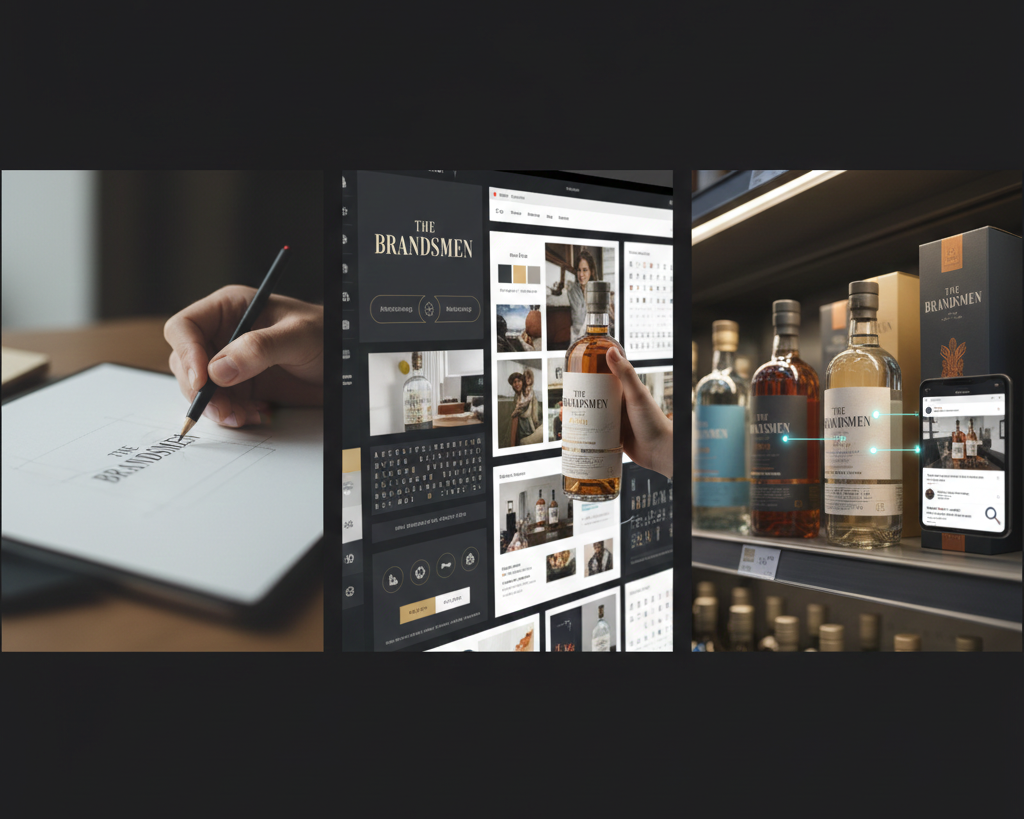
Difference Between Branding And Packaging | The Brandsmen
If you are searching for the difference between branding and packaging, here is the simple answer.
Branding is the strategy and identity behind a product. Packaging is the physical expression of that identity at the point of purchase. They work together, but they are not the same thing.
If you are building or refreshing a product, especially in a category like wine, spirits, or e-commerce, getting this distinction right saves time, avoids reprints, and keeps your marketing consistent across every channel.
Branding vs Packaging At A Glance
- Branding = your positioning, voice, story, visuals, and the rules that keep everything consistent
- Packaging = the label, box, bottle, or container design that communicates that branding in one glance
- Branding comes first when you are still shaping who you are
- Packaging comes first when the brand is clear but the shelf presence is not converting
What Branding Really Includes
Branding is not just a logo. It is the system that makes people recognize you, trust you, and remember you.
A strong brand typically includes:
- Brand positioning (what you stand for, who you are for, why you are different)
- Messaging (taglines, product naming, tone, key claims)
- Visual identity (logo, typography, colors, image style)
- Brand guidelines (how everything is used across web, social, ads, and print)
- Customer experience cues (how it should feel to buy from you, unbox it, and talk about it)
When branding is done well, it becomes easier to make decisions. You stop guessing. Your website, labels, and marketing start looking like one cohesive brand instead of separate pieces.
What Packaging Design Actually Covers
Packaging is where brand strategy meets constraints. It has to look great, but it also has to function in the real world.
Packaging design can include:
- Label design and layout
- Dielines and print-ready production files
- Hierarchy of information (what gets seen first)
- Color and finish choices (matte, foil, emboss, texture)
- Compliance and required elements (especially in alcohol)
- Shelf and e-commerce performance (how it reads at a glance, how it appears online)
Packaging is often the first physical interaction someone has with your brand, so it needs to do more than look nice. It has to communicate value fast.

The Difference Between Branding And Packaging In One Table
| Category | Branding | Packaging |
| Primary goal | Build identity and trust | Drive selection and clarity at purchase |
| Where it shows up | Website, ads, social, sales decks, emails | Labels, boxes, bottles, cans, shipping cartons |
| What it includes | Story, messaging, visual system, guidelines | Layout, print files, finishes, materials, compliance |
| Time horizon | Long term | Campaign and product-cycle based |
| Measurement | Brand recall, consistency, conversion lift over time | Shelf impact, scanability, sales velocity, reorder rate |
| Common failure | Looks good but says nothing | Looks nice but is confusing or unreadable |
This is why the difference between branding and packaging matters. Branding builds the foundation. Packaging makes the foundation visible in a high-stakes moment.
Real-World Examples
Example 1: Wine Brand With Strong Branding But Weak Packaging
You have a clean name, a defined audience, and a clear story, but the label:
- Blends in on the shelf
- Hides the varietal or region
- Looks premium in isolation but not in a lineup
In this case, you do not need to reinvent the brand. You need packaging that expresses it better. This is the scenario where a focused packaging project delivers fast wins.
Example 2: E-commerce Product With Great Packaging But No Brand System
You have a nice box and a good product, but everything else feels inconsistent:
- Website feels like a different company than the package
- Ads use different messaging than the label
- Social visuals do not match the unboxing experience
Here, packaging is doing the heavy lifting alone. The fix is usually branding first, then packaging updates once the system is clear.
Example 3: Spirits Label That Needs Both Design And Compliance
Alcohol is a special category because packaging has two jobs:
- Tell a story quickly
- Meet regulatory requirements
If your brand voice is solid but the label is messy due to required elements, the best path is packaging design led by hierarchy and production constraints.
What To Do First: Branding Or Packaging?
If you are unsure which one you need, use this decision guide.
Start With Branding If
- You cannot describe your audience in one sentence
- Your name, story, or positioning is still in flux
- Every designer or freelancer creates a different look
- Your website and marketing do not feel consistent
Start With Packaging If
- Your brand is clear, but the product does not stand out
- The label is hard to read at shelf distance
- Your product photos look flat or confusing online
- You are preparing for a launch, refresh, or retail pitch
Do Both If
- You are rebranding and launching new products
- You are entering a new market tier (value to premium, premium to luxury)
- You are expanding a lineup and need a system across SKUs
A common mistake is doing packaging first without a real brand system. The label may look good, but it becomes hard to scale when you add new products or channels.
How The Brandsmen Approaches Branding And Packaging
The Brandsmen is a Denver based digital marketing agency that helps brands grow with strategy-led design, packaging, and search marketing. We do not treat branding as decoration. We treat it as a business asset that should support sales, conversion, and long-term growth.
Our approach is built around three priorities:
1) Strategy Before Design
We start by understanding:
- Your audience
- Your category
- Your competitive landscape
- What has to be true for someone to choose you
2) Design That Works In The Real World
Packaging has to survive:
- A shelf test
- An ecommerce thumbnail test
- A photo test
- Production realities
3) Measurement And Iteration
If packaging is tied to e-commerce or a digital rollout, we can measure outcomes through:
- Conversion rate changes
- Product page engagement
- Ad creative performance
- Branded search growth over time

Packaging Design Details That Make Or Break Performance
A few practical elements tend to separate average packaging from packaging that converts.
Information Hierarchy
People should be able to answer these questions instantly:
- What is it?
- What type or variant is it?
- Why is it premium or different?
- What should I do next (buy, scan, learn more)?
Readability At Distance
If the key details cannot be read from a few feet away, the packaging will struggle in retail environments.
Consistency Across A Lineup
If you have multiple SKUs, packaging should look like a family:
- Consistent structure
- Clear differentiation
- Easy navigation
Production And Print Realities
A design that looks good on a screen can fail in print if:
- Colors shift
- Fine lines break down
- Finishes are not planned from the start
FAQs: Branding And Packaging
How Is Branding Used In Packaging?
Branding shows up in packaging through the design system: colors, typography, tone, imagery, and the way information is structured. Packaging is one of the most important places your brand has to be clear, because it is often the first physical moment someone experiences.
Is Packaging A Branding Strategy?
Packaging is part of branding strategy, but it is not the entire strategy. Branding is the system. Packaging is one execution of that system, with unique constraints like space, materials, and compliance.
What Is The Difference Between Branding And Packaging?
The difference between branding and packaging is that branding defines your identity, while packaging expresses that identity through the product’s physical presentation. Branding builds recognition and trust. Packaging drives clarity and selection at purchase.
Why Is Packaging Important In Branding?
Packaging affects perception. It influences whether a product feels premium, trustworthy, and worth the price. It also shapes brand recall because it is a repeated touchpoint in homes, stores, and photos.
Is Packaging Part Of Brand Identity?
Yes. Packaging is a component of brand identity because it is one of the clearest ways your visual system becomes real. It should feel consistent with your website, ads, and product pages.
About the Author


