
How to Choose an SEO Marketing Agency
If you are wondering how to choose an seo agency, start by looking at how the agency connects SEO to real business growth. The best SEO marketing agency will offer clear reporting, a defined strategy, and experience with content, technical SEO, local SEO, and AI search visibility. In 2026, choosing the right partner means finding a team that can improve rankings, drive qualified traffic, and turn search into revenue.
Start With Your Business Goal
Before you compare rates, case studies, or promises, define the job SEO needs to do.
A good agency should ask questions like:
- Are you trying to drive leads, phone calls, booked demos, or e-commerce sales
- Are you trying to improve local visibility locally or expand nationally
- Are you trying to build a long-term content asset or fix a site that already has authority
- Are you trying to compete in standard search results, AI answers, or both
This matters because SEO strategy should change based on the business goal.
If an agency starts by selling a package before understanding your growth model, that is a warning sign.
For businesses seeking a clearer view of what a full strategy includes, The Brandsmen positions SEO as an outcome-driven service tied to organic traffic, leads, page reviews, reporting, and local optimization, rather than as a vague monthly checklist. The Brandsmen was founded in Denver in 2014 and built its model in direct opposition to the smoke-and-mirrors agency approach it saw in the market.

Look for Strategy, Not Just Deliverables
Many agencies still sell SEO by counting outputs.
You will hear things like:
- X blog posts per month
- X backlinks per month
- X keywords tracked
- X technical fixes completed
Deliverables matter, but they are not the strategy. A real agency should explain why each activity exists and how those activities work together.
Here is what to look for instead:
- A content plan based on intent, not just keyword volume
- Technical prioritization based on impact, not random audits
- Internal linking that supports key service and pillar pages
- Local SEO strategy if geography matters to your business
- Conversion thinking, not just traffic thinking
Google’s SEO Starter Guide makes the core point clear: SEO helps search engines understand your content and helps users decide whether to visit your site via search. That means the work should improve discoverability and decision-making, not just impressions.
Ask How They Handle Content Quality
This is where many agencies fall apart.
In 2026, content has to do more than exist. It needs to answer the query directly, cover the next logical questions, and show experience or insight that generic AI text cannot fake.
Ask these questions in the interview:
- How do you decide which topics deserve a page
- How do you prevent keyword cannibalization
- Who writes the content, and how is expertise built into it
- How do you connect blog content to service pages and revenue goals
- How do you measure whether content is doing its job
If the answers sound generic, the work probably will be too.
Make Sure They Understand AEO and GEO
This is the differentiator most generic checklists miss.
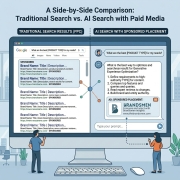
Search behavior is changing. Google says people are using AI Overviews and AI Mode to ask new, more complex questions, and that these experiences show links in a range of ways while surfacing a wider range of sources.
That means a modern agency should understand:
- AEO, or answer engine optimization, for question-based visibility and concise, citable answers
- GEO, or generative engine optimization, for improving how your brand appears in AI-shaped search experiences
- How page structure, entity clarity, and topical depth influence discoverability
- Why do FAQ sections still help users even though FAQ rich results became far more limited for most sites in Google Search?
If the agency treats AI search as a fad, it is behind. If they talk about it but cannot explain the implementation, they are still behind.

Review Reporting Before You Sign Anything
Transparency should not be an afterthought.
Ask to see:
- A real report, not a mockup
- How rankings are contextualized
- How traffic is tied to leads or sales
- What gets discussed in meetings
- What happens when performance is flat
You want an agency that can explain both wins and misses without hiding behind jargon.
A good report should help you answer simple questions:
- What changed this month
- Why did it change
- What is next
- How does it affect the business
If a report gives you charts but no decisions, it is not good reporting.
Do Not Ignore Local Market Knowledge
If your company depends on local leads, local understanding matters.
Google states that local results are mainly based on relevance, distance, and prominence. That means a Denver business should care whether an agency understands:
- Denver search competition
- Local service intent
- Google Business Profile optimization
- Review strategy
- Service area content
- city and neighborhood search behavior
An agency does not need to be local to deliver good SEO, but local market fluency can accelerate strategy and improve relevance.
Ask About Contract Terms and Fit
This part gets skipped too often.
Even if the agency looks strong on paper, ask:
- What does onboarding look like
- Who will actually do the work
- How often will we meet
- What do you need from us
- How long do clients usually stay
- What are the contract terms
- What happens if priorities change
You are not buying a dashboard. You are choosing a working relationship.
The best agencies tend to be direct here. They do not hide behind long explanations or pressure tactics. They set expectations, define responsibilities, and show you how the engagement will run.
That is the lens that makes how to choose an seo agency practical instead of theoretical. You are not just choosing expertise. You are choosing clarity, accountability, and trust.
Questions to Ask in the Final Agency Interview
Bring these into the call:
- What would you focus on in the first 90 days for our site
- How do you decide whether a page should target search, AI answers, or both
- How do you measure SEO success beyond rankings
- What does your reporting actually look like each month
- How do you approach content quality in an AI-heavy search environment
- What technical issues usually create the biggest performance ceiling
- How do you handle local SEO for Denver businesses
- What are the contract terms, and what happens if we need to pivot
If an agency answers these clearly, that is a good sign. If they dodge, generalize, or oversell, move on.

What the Best Choice Usually Looks Like
The best agency is rarely the one with the flashiest pitch. It is the one that can clearly explain your growth path, show its work, and adapt SEO to how search actually works now.
That is the real answer to how to choose an SEO agency in 2026. Look for a partner that understands goals, builds strategy before tactics, creates useful content, reports transparently, knows your market, and takes AI search seriously.
If you want to see how we approach each of these, the strategy session is free and takes 30 minutes. You can review The Brandsmen’s free consultation page. We at The Brandsmen describe ourselves as a friendly, modern, expert-led Denver agency built around honest, authentic, skillful work and long-term relationships.
FAQ
How do I know if an SEO agency is being honest?
An honest agency explains what it is doing, why it matters, and what success should look like. It should be able to show real reports, define metrics in plain language, and acknowledge limits or tradeoffs instead of promising instant rankings. Transparency in process and reporting matters more than polished sales language.
Why do AEO and GEO matter when choosing an agency?
They matter because search is no longer limited to ten blue links. Agencies now need to think about how content gets surfaced in AI Overviews, answer-style results, and generative search experiences. Google has explicitly said these AI features are changing how people search and how sites are discovered.
Is the FAQ schema still worth using?
FAQ content remains useful to users because it improves scannability and helps answer follow-up questions. FAQ rich results, however, have been reduced significantly for most non-government and non-health sites, so schema should support clarity and structure rather than be treated as a guaranteed visibility tactic.
About the Author