

Alcohol E-commerce Trends 2026: What’s Changing in Online Alcohol Sales
If you are searching alcohol e-commerce trends 2026, you are probably trying to answer two practical questions:
- Where is the category actually headed this year?
- What should an alcohol brand do next to grow online without getting burned by compliance, margins, or rising acquisition costs?
This update keeps what worked in the 2025 version (clear trends, simple explanations, actionable takeaways) while fixing what dated it and strengthening the strategy angle for 2026.
Key Takeaways For 2026
- Alcohol e-commerce is stabilizing and shifting from “pandemic spike” behavior to sustainable, repeatable growth patterns. (That changes how you invest.)
- Marketplaces are not the whole story anymore. Many brands are rebuilding around owned channels, retailer partnerships, and better product data.
- Compliance and age verification are no longer “backend details.” They are conversion levers, because friction kills checkout.
- The winners in 2026 treat e-commerce like a system: demand generation, product pages, retention, logistics, and measurement all working together.
What Changed Since 2025
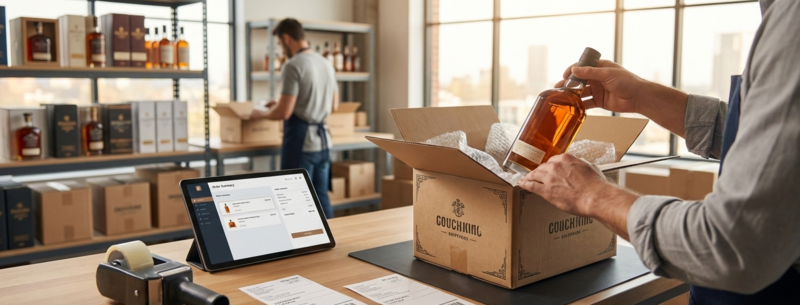
The biggest change is that the market has matured. The “easy growth” period is over, and the brands that keep winning are the ones who tighten fundamentals.
A clear example is marketplaces. The old delivery-app landscape is not the same as it was. Drizly, which used to be the go-to example in alcohol delivery, shut down in March 2024 after Uber decided to focus on alcohol inside its broader delivery strategy.
So in 2026, the conversation is less about one standalone alcohol marketplace and more about multi-category delivery apps, regional retailers, and brand-owned e-commerce experiences.
The Evolution Of Alcohol E-commerce
Traditionally, alcohol sales were dominated by tasting rooms, bars, restaurants, and retail shelves. E-commerce changed that by making discovery and purchase possible from anywhere.
What is different now is that shoppers expect alcohol e-commerce to feel like modern e-commerce. They want:
- Fast, simple navigation on mobile
- Clear shipping and delivery expectations
- Frictionless age verification
- Great product pages with real detail
- Personalization that feels helpful, not creepy
That is why alcohol e-commerce trends 2026 are less about novelty and more about execution.
Alcohol E-commerce Trends 2026 That Matter Most
1) Direct-to-consumer stays important, but retention matters more than launch hype
DTC is still a core growth engine, especially for brands that want tighter control over pricing, storytelling, and customer data.
But in 2026, the differentiator is not “we launched DTC.” It’s whether you can keep customers coming back.
What strong retention looks like:
- Email and SMS that are segmented by taste, price point, and purchase frequency
- Post-purchase flows that educate, not just discount
- Bundles and limited drops that feel curated
- Loyalty that rewards repeat buying without training customers to wait for coupons
If your DTC store is growing but your repeat rate is flat, your CAC will eventually catch up to you.
2) Compliance and age verification are part of conversion rate optimization
Every alcohol brand knows the rules vary by state and that shipping restrictions can be complicated. But many brands still treat compliance UX as an afterthought.
TTB guidance is clear that you still need to understand state requirements and that some states prohibit direct shipment to individuals.
In practice, that means your e-commerce experience must be built to reduce confusion at checkout.
Quick ways to reduce friction:
- Put shipping restrictions and delivery timelines on the product page, not only in the footer
- Use clear, plain-language shipping policies
- Make age verification fast and consistent across devices
- Add an FAQ-style block inside the page flow (not a separate FAQ section) that answers the 3 questions shoppers ask most: where you ship, how long it takes, and what ID checks happen
3) Product pages become your “digital shelf” and your SEO moat
In 2026, many alcohol brands are investing more in product detail pages because they do double duty:
- They convert shoppers
- They rank for search and show up in AI-driven discovery
If you want to win for alcohol e-commerce trends 2026, you also need to win on the pages that actually sell.
High-performing alcohol PDPs usually include:
- Flavor notes written for normal people (not winery jargon)
- Clear ABV, size, and “best for” use cases
- Pairings and cocktail suggestions
- Reviews, FAQs embedded in the page flow, and structured product data
This is where e-commerce SEO and conversion rate optimization overlap.
4) Subscriptions evolve from “monthly box” to flexible replenishment
Subscription models still work, but shoppers want control. Many customers are not looking for a rigid box anymore. They want:
- Skip options
- Swap options
- Better onboarding quizzes
- Reorder reminders based on actual behavior
If your subscription pitch is just “save 10%,” it is easy to copy. If your subscription experience is genuinely personalized and reduces decision fatigue, it is much harder to replace.
5) Marketplace and delivery strategies are becoming blended
Since the market changed, brands are balancing three routes to the customer:
- Owned DTC e-commerce
- Retailer e-commerce partnerships
- Delivery apps and local fulfillment options where they make sense
The strategy is not “choose one.” It is choosing the right role for each channel while protecting margins and brand control.
A smart blended approach often looks like:
- Use marketplaces for discovery and convenience-driven purchases
- Use DTC for storytelling, bundles, loyalty, and data
- Use retail partners for scale and availability, especially in strict states
6) Data and AI improve merchandising, forecasting, and content, not just ads
AI is useful in alcohol e-commerce, but the real value is often operational:
- Forecasting demand by season, region, and promotions
- Finding which product attributes correlate with conversion
- Identifying where shoppers drop off in the funnel
- Scaling content that answers real questions (without publishing fluff)
This is also where measurement matters. If you cannot confidently answer “which channel drives profitable repeat customers,” you are guessing with your budget.
Challenges Alcohol Brands Still Face In 2026
Even with growth opportunities, there are real constraints:
- Regulatory complexity across states and countries
- Shipping costs and breakage risk
- Rising paid media costs and platform volatility
- Competition from established retailers with built-in distribution
The best brands do not pretend these problems are easy. They build systems that reduce risk and improve conversion over time.
How The Brandsmen Helps Brands Act On Alcohol E-commerce Trends 2026
The Brandsmen is a Denver based digital marketing agency that specializes in e-commerce SEO and AI-driven search marketing for alcohol brands that want measurable growth, not vague “visibility.” If you’re ready to elevate your e-commerce strategy and expand your market reach, our team can help you sharpen your positioning, improve conversion on key product pages, and build a search-led plan that supports sustainable sales in a tightly regulated category. Contact The Brandsmen to see how our digital marketing, branding, and e-commerce optimization services can strengthen your online presence and help you grow in a rapidly changing market.
About the Author