
Optimize For ChatGPT: How To Show Up In Perplexity And AI Search
If you have been doing SEO for a while, “optimize for ChatGPT” can sound like another buzzword that appeared overnight and suddenly became urgent. One week, you are focused on rankings and traffic. Next week, your leadership team is asking why a competitor keeps coming up in AI answers.
Here is the simple definition: to optimize for ChatGPT means improving how often your brand and content are referenced, recommended, or used as a source inside AI-driven answers, not just how well a page ranks in a list of blue links. That includes ChatGPT, Perplexity, and experiences like Google AI Overviews, where the answer is summarized, and the number of visible options is smaller than a traditional results page.
What “Optimize For ChatGPT” Actually Means
When someone asks a question in an AI search experience, the system tries to produce a direct answer. Sometimes it cites sources. Occasionally, it mentions brands. Sometimes it summarizes what it “knows” based on training data, indexing, or retrieval. Either way, the game is not justabout ranking. The game is considered trustworthy enough to appear in the answer.
That is why optimizing for ChatGPT is less about “tricks” and more about making your content:
- Easy to interpret and summarize
- Clearly authoritative about one topic
- Supported by signals that help the web trust you (brand authority, consistency, third-party references)
- Written in a way that matches how people ask questions out loud
This is also why we think about this as a natural evolution of search, not a replacement for SEO. Strong SEO foundations are often what make AI visibility possible in the first place.
How AI Visibility Differs From Classic SEO
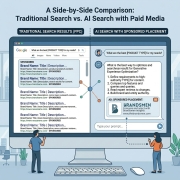
Traditional SEO is mostly a competition for ranking positions across many queries. AI answers change the layout of the problem:
- Fewer visible “winners” because the answer is summarized, not listed.
- More emphasis on clarity and directness because the model needs to provide a clear explanation.
- More reliance on authority because the model must choose which sources to trust or cite.
- More mixed attribution because some systems prominently display citations, while others mention brands without a clear link trail.
So when someone asks how to rank in ChatGPT, the honest answer is: you are not “ranking” in the same way. You are improving your chance of being included.

The Building Blocks That Influence ChatGPT And AI Answer Visibility
1) Write For Questions, Not Just Keywords
A lot of “ChatGPT SEO” comes down to answering real questions in plain language.
Instead of only targeting a short keyword, build sections around intent-based queries such as:
- “How to optimize for ChatGPT for B2B content.”
- “What should I change on my blog to show up in ChatGPT answer?s”
- “Does SEO still matter for AI search?”
When you structure content around questions, you make it easier for AI systems to extract a clean response. You also make it easier for humans to skim, which still matters in every channel.
2) Make Your Content Easy To Extract And Summarize
AI systems tend to reward pages that are simple to interpret. That means:
- Short paragraphs
- Clear subheadings
- Definitions near the top
- Bullet lists that summarize key points
- Step-by-step sections that read like instructions
A practical rule: if a reader can scan your page and understand the core answer in 20 seconds, an AI system is more likely to summarize it accurately.
3) Build Topic Authority Instead Of Posting Randomly
If your site has one post on “AI search optimization” followed by 10 unrelated posts, it is harder for systems to see you as a reliable source.
Topic authority is built by publishing clusters that cover the full journey:
- The basics and definitions
- Common mistakes
- Implementation steps
- Examples, templates, and checklists
- Related use cases by industry
This is where generative search optimization and classic SEO overlap. Google’s guidance still centers on helpful, people-first content. If you are publishing pages that exist only to scale output without value, that is a risk for search performance overall.
4) Strengthen Brand Signals Across The Web
To show up in ChatGPT answers, your website is only part of the equation. AI systems often lean on broader trust signals, including third-party mentions and consistent brand information.
Focus on:
- Consistent naming and positioning across your site, profiles, and citations
- Strong About and author pages that explain expertise
- Digital PR and coverage on reputable sites in your category
- Unique points of view backed by real experience
This is also why many brands see better results when “AI answer optimization” is paired with PR, thought leadership, and partner mentions, not just on-site edits.
5) Use Structure That Matches How Answers Get Built
A simple pattern that performs well across AI search experiences:
- A one-paragraph summary near the top
- A “what it is” definition
- A “why it matters” section
- A “how to do it” checklist
- A “mistakes to avoid” section
- A “next steps” section
If you want to optimize content for ChatGPT, that structure helps the model understand your content as a complete answer, not scattered thoughts.
Practical Checklist To Optimize Content For ChatGPT And Perplexity
If you want a fast starting point, use this checklist on your next article or landing page:
- Include a clear definition in the first 100 words
- Answer one primary question per page
- Add a short “TLDR” style summary (written as real sentences)
- Use subheadings that look like the questions people ask
- Add bullet lists for steps, criteria, and comparisons
- Support claims with credible sources when appropriate
- Keep your language specific, not vague marketing copy
- Update pages that are outdated, especially stats and “best tools” lists
- Make sure your brand positioning is consistent across key pages
This is what we mean when we say optimize for ChatGPT is brand-safe and sustainable. It is not about chasing hacks. It is about being clear, credible, and easy to cite.

How Tracking ChatGPT Visibility Works Right Now
Tracking is still evolving, so any agency promising perfect attribution is overselling it.
What you can do today is practical and measurable:
- Monitor brand mentions inside AI answers for your priority topics
- Track whether your site is cited when AI systems provide sources (common in tools like ChatGPT search and Perplexity)
- Compare your visibility against a competitor set
- Log prompts and results over time to see trends
This is not the same as traditional rank tracking, but it is enough to make good decisions and prove whether your visibility is improving.
GEO Vs SEO: How It Fits Together
You will see terms like GEO (Generative Engine Optimization) used to describe this shift. The important part is not the acronym. The important part is the strategy.
Our view is simple:
- SEO builds the foundation: traceable site, strong content, authority, and technical health
- GEO builds on top of it: content shaped for AI answers, brand signals, and visibility beyond the click
That is why optimizing for ChatGPT should not trigger panic. If you have been doing real SEO the right way, you are already closer than you think.
What To Do Next
If you want to prepare early and avoid guesswork, here is the best next step:
- Identify the 10 to 20 questions you want to “own” in your category
- Review what ChatGPT and Perplexity currently say for those prompts
- Build or improve pages that answer those questions clearly and completely
- Strengthen brand authority signals so your content has a reason to be trusted
- Track mentions and citations monthly, then refine based on what is working
If you want a partner who can translate between classic SEO and AI search visibility without hype, that is exactly what we do at The Brandsmen. You will get a plan that is transparent, measurable, and built for how search is changing.
About the Author